Sunday, November 30, 2008

Surrealism


Surrealism is a genre of art that has always interested me starting with the learning of Dali, Brenton and the Surrealist Manifesto in schooling. The idea of tapping the unconscious and expressing it through art has proven to produce pretty remarkable works. Freud then gets his input on the genre, and publishes his works and ideals of life, death, sex, fears and the subconscious mind, which is quickly adapted to Surrealism. The bizarre dream like picture and paintings are like none other, depicting illusions and commonplace items altogether. It doesn’t take a stretch of imagination to say that drug use as well was an outlet that many artists approached the movement. I was surprised in the readings that drug use wasn’t mentioned much or at all in a movement so heavily based on self-reflexivity, the body/mind, and the subconscious. The one aspect of Surrealism that I was unaware of is the influence on women during the movement. It was said to be mainly a male-dominated movement where women were portrayed through stereotypes and symbols. Many of the work described as ‘phallic’ and made with the ‘attitude’ of men, were not only noticed by women artists but expressed through their own work. Personally I feel actual phallic representation like in the work Compulsion Furniture by Yayoi Kusama is a little overdone and overt. I enjoyed a lot of Francesca Woodman’s work with mirrors in her photography. I find the use of mirrors fascinating and incorporate it in my films as well, I think it is put best by Posner with “The mirror that traditionally reveals becomes…a barrier to conceal or deflect identity. “ I’ve always seen a mirror as a parallel universe that has its own form of expression, with their own story to tell. It perplexes me that Kusama, Mendieta, and Woodman all died at such young ages perhaps because of deep affiliation of their artworks and the emotion that it carries. Again it is interesting to see how women have a hand on this movement that is noted to be a male dominated genre.

Sunday, November 9, 2008

iGeneration


I found Merchants section on ‘Discourse of Identity Threat’ interesting and how an unwritten book has been formulated because of them. The emotion that I’ve come to realize is the most effective is fear, in regards to ones safety. In the 90’s with the rise of networking with chat rooms people could create alter ego’s, and in turn attain information that was previously unavailable. Furthermore the dependence of technology paralleled notions of ‘criminals to steal your identity’, or the paranoia of ‘big brother’ with complete surveillance. There was a demand for personal responsibilities in regards to the Internet and ways to protect oneself. All it took was to hear that somebody was actually murdered because of an online social networking site, for me to keep my address hidden. Many people were (and still are) reluctant to buy things online with a credit card due to these fears. We hear horror stories of people being violated socially, financially, sexually even from the near infinite Internet. These stories as horrible as they are, serve as a reminder to people’s online identities and upholds Merchants ideals of fear and trust.
Furthermore I found the idea of performing identity online to be captivating. There is a constant ‘narrative’ with online networking sites that are streaming online which are both affected by real life and virtual consciousness. Just like altering one’s self in face-to-face in social situations, ones ‘virtual identity’ can be altered online. Instant messaging and texting are phenomenal conveniences; yet the most simple of miscommunications can occur due to context, word selection, tone, etc.
There are certain characteristics that people cannot alter about themselves that ground them, for example race, gender, and location even. The other traits are behavioral induced by pop culture, ideologies, trends, etc. These behaviors alter through maturation; with technology becoming more of an everyday commodity, are ever increasing. A personal example I can distinctly remember is when my mom set up my grandparents their first desktop. As you can imagine they had some difficulty adjusting to the operating system, functions, and its capabilities; yet in time they adapted their own virtual identity. In the ever-growing digital age we live in, I think its smart to have a grasp of ones virtual identity in correlation with the real self.

Sunday, November 2, 2008

The Gender Eye


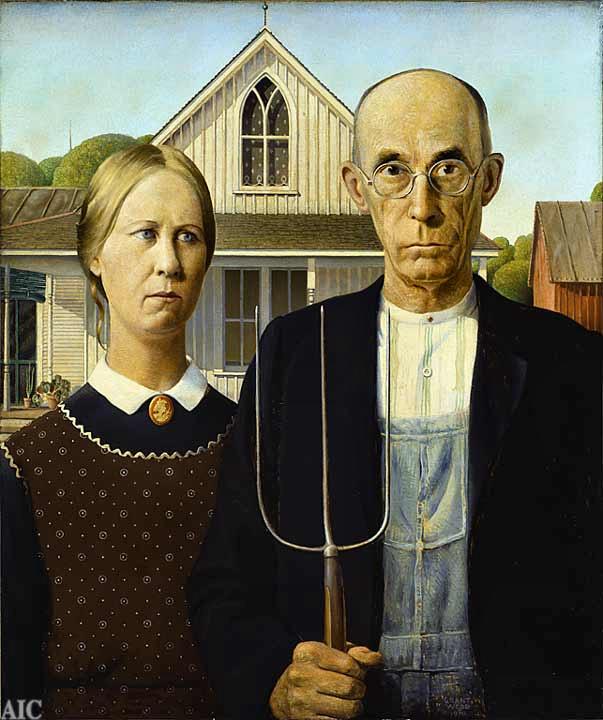
The readings this week bring up good points on the subjectivity of gender and the autistic role. It seems that there are always conscious and unconscious decisions that are instilled by the artist in regards to gender. As Adrian Piper questioned herself - How might I be different if the history i chronicled in my journal had happened to be a man? I guess the unconscious decisions are what i find to be more fascinating because honestly when I take pictures, I don't think there are any overt Male-like decisions that cross my mind. I feel that the decisions I make when taking a photograph is rather textbook in framing, lighting, subject matter, balance, focus, etc. The more interesting half is the unconscious decisions in the message of the pictures and what they are telling. Gender finds its home here as unconscious (and sometimes made conscious by artists such as Eleanor Antin) motifs are expressed through the lens. To think of some examples the 'Kissing on VJ Day'. Here male dominance is framed dearly with the passive loyal female. The reason it was so popular is because it upheld the general characteristics of either genders, which audiences can grasp upon. American gothic as well comes to mind as the both characters appease the 'classic midwest Americans.' Reaching back to figure photography in the early 1970's, feminism was a growing topic in art. Artists such as Kate Craig looked at these characteristics and pointed out the "absurdity, puns, and pranks" and had a "Warholian fascination with Mass culture." In doing so, they invented aliases and used gender based symbolism in their performances and photographs. The thing that i find interesting is that these artists are putting themselves out there fulfilling their gendered 'role' while still having the "art consciousness." Going back to Adrian Piper, shes describes "the work has no meaning of independent existence outside of its function as a medium of change...the catalytic agent between myself and the viewer." I feel for my next photo project I would like to adapt these concepts of change into my work. I feel I can accomplish both feministic and masculine insight on photos regardless of what gender the subject is. Just looking at mass culture is enough to grasp the general publics view on sexuality and gender roles.

Sunday, October 26, 2008


I find it interesting that Cindy Sherman noticing through social and cultural knowledge, still images can say so much. There are many stereotypes and assumptions in regard to image especially clothing. We’ve all grown up being taught that particular wardrobe can tell you a lot about a person. A woman wearing a white gown holding flowers can be assumed to be a bride, a man with an eye-patch and peg leg is a pirate. Culturally we have all attached ourselves to collective representations of ‘image’ through clothing. Sherman looks into femininity and how at the surface of the pictures, an interior mix of emotions is characterized. There is a catalog of possibilities for the photographs, Williamson puts it best with “Her expression is an index of something and someone else, something we don’t know about but which everything in the frame points to.” I feel I can relate to her insight in the performance I did, for I made sure the images were indexical enough to send a concise message. The paradigm between vulnerability and eroticism were common themes even without having Sherman in lewd sexual poses. None of the images I encountered jumped out at me [as a male] as overtly sexual. Her experiences in B-movies, foreign films, and film noir transferred over into her photography. Many of the women characters in these films are depicted to be distressful, passive, and victimized. This plays into the notion of social and cultural opinion on women and their images in film, television, and magazines. Sherman played into these ideals and projected a false-reality in her photographs, respectively named ‘Film Stills.’ We know that these pictures were staged and the frame was predetermined, and that Sherman knowingly dressed the way she did to make a statement. There are stories told in the images, some more complete than others; because of that I feel it’s up to the audience to put themselves in Sherman’s persona. She clearly takes into consideration the entire frame of shot and make sure it is authentic even down to the blouse buttons. “Sherman’s special genius has been to locate the oracle not in the ‘out there’ of media bombardment” Peter Schjeldahl says “but in the ‘in here’ of her own partly conditioned, partly original mind.” I think Cindy Sherman exhibits this well through her many personas in her images. I feel nowadays many advertisements get by on the sole fact of sex appeal. Companies create unlikely yet enticing situations with characters that only exist in ‘perfect Old Navy world’. These ads create images that people feel they must emulate, again being judged by those who consume the product, or those to ‘choose’ not to. Despite willingly denouncing corporate products, people are still judged because of the clothes they wear, the cars they drive, and even the food they eat. Cindy Sherman saw these along with the addition of film and television and their effects on culturally collective thought.

Performance Project #1


From what I’ve learned about performing art in time and space is the idea of context. For my performance I wanted to replicate a seemingly common practice that is acknowledged by most. I find golf to be such a visually appealing sport, as one can go out and enjoy the outdoors. I decided to go and pursue urban environments as it is something that visually appeals to me as well. For my alter ego I decided to go out and enjoy the day, weather, and of course golf. I was in no rush for my shooting; I paced and thought about my camera shots, similar to my ‘golf’ shots. When I found a spot, I second guessed myself and tried different positions and techniques, like an indecisive golfer.
For my first shot I call it “Marble Fairway,” for which I had a fairway in mind. Though still accompanied with much golf course-like foliage; the stone steps and pathway in the foreground serve as the playing surface. Gratefully on my second shot I got a few cars in the picture; “Chip Shot” has a tighter frame than the first. Again trying to incorporate foliage into the cityscape, I pose as an unlucky golfer chipping out of a tough spot. This is actually the only piece that I didn’t alter in Photoshop out of all five. “Stone Trap” is a shot again incorporates the marble structures outside of a drained water fountain. I had a sand trap in mind as the stone structures made somewhat of a concave basin. “Light Putt” starts to wrap up the golf outing as I size up a putt. I didn’t notice until I later but in the picture I have a look on contemplation, literally thinking about my ‘shot’. “19th Hole” wraps up the outing as I hang out by the river walk. I tried not to look to overwhelmed, relaxing and sharing a few drinks with the pals. This was towards the end of my shoot as well, so the sense of accomplishment is hopefully revealed in the picture. My goals were to interact as a golfer were in the context of time and space. Sure displaying of skills is important, but to be honest I only actually hit the golf ball only a dozen times and at no particular target. Carlson says it is “…but less of particular skills than of a recognized and culturally coded pattern of behavior.” I think picture speak for themselves for authenticity.

Sunday, October 12, 2008

'Street' Performing


The word performance has been used to describe an array of different disciplines. The article this week discussed its increasing popularity in describing not only art and literature, but in social sciences as well. It notes that when one performs, they have the recognition of the act and are implementing their own interpretation. Strine, Long, and Hopkins in a 1990 survey article argues that performance is “developed in an atmosphere of ‘sophisticated disagreement’” by participants who “do not expect to defeat or silence the opposing positions.” This to me could be looked at in the ‘performance’ of daily human activities and the ‘roles’ that people carry out. There are certain ways people interact in different situations, even if their semantic overtone are kept the same; some of these are done unintentionally, yet the performance itself is still conscious. Performance can be judged not only in displaying ones skills or talents in a specific venue, but a basic competence to fulfill a task at hand. Furthermore in the social realm, linguistics has found itself in the performative mindset as it displays consciousness if on stage or on the street. When actors are playing a role, they speak in a way that they feel the character would say; so the actor becomes an elusive ‘other.’ All the emotions that the actor is trying to portray are collaborations of their own relationships with the world and others. It seems to me that it is easier to spot bad acting rather than good acting. With good acting, a person is expressing themselves in a diagetic setting, with a conscious acknowledgement and appears natural. When an actor is spotted doing or saying something that isn’t contextual to the scene, it doesn’t reflect the speaker's competence for the situation. I have found myself at times finding a loss of words to describe a situation; when this happens there is a failure not only linguistically but socially as well. If one steps back and looks over just one day of their life and all the performances during, they would find a pretty interesting relationship with the world.

Sunday, October 5, 2008

Manipulating a Moment


The article this week was discussing the ever-growing influence of computer technologies affecting the validity of photography. We can look all the way back to Bayards ‘Self Portrait as a Drowned Man’ for falsified pictures. The application of Photoshop and other rendering processes question the once objectified photograph as Walter Benjamin puts it a “standard evidence for historical occurrences.” The tampering of images dejects the idea of “straight” photography, in which a photo represents truth, objectivity, and linear. I feel it is still important to have “straight” photography for things such as photojournalism and other truth bearing disciplines. On the other hand, the concepts of image manipulations have brought to light new forms of art. Lynn Hershman did a series of photographs that she tampered in one way or another. In this, the manipulation itself becomes the medium. The once thought of ‘objective’ picture is thrown out with the institution of collage, photocopiers, text, and digital image processing. I find these interesting because growing up with basic knowledge of computer-based image rendering programs; one can easily do such work. I myself have made images using different techniques, in which anyone can be placed anywhere in the world, essentially doing anything. There is a level of amusement with manipulating images, which is why it is so common online. Even the process of film editing with consumer-rate products have shown talented special effects. As technologies become widespread and implement simple operating systems, photo manipulations have become a common practice even on the smallest of scale.

Sunday, September 28, 2008

Performing a Document


Performance has always been a source of expression throughout the years. The addition of technology, and applying it graciously, performance entered a new realm. The documentation of performance in conjunction with the audiences experience is argued to be documentary or theatrical. There is a general acceptance of ontological relationship between the documentation and the performance; in which the performance happens first, and the documentation is merely a captured framed moment of this timely event. I feel that how and where the audience interacts with the performance is more important that for the ‘authenticity’ of the document. If there is any sort of obstruction of the performance, or if the audiences experienced is bargained because of the documentation; then there is a question of purity. When audiences find themselves contributors, then perhaps the document that is later reviewed and/or edited is not just to the original. I found in the reading that there was no audience for Chris Burden’s Shoot. In this 1971 performance, Burden had a friend shoot him in the arm inside of an emptied gallery. Going back to the idea of theatrics, some performances are meant to be staged in which the performance itself is the document. The reading talked briefly about music production and specifically the Beatles. An album simply signifies the bands best take at each song, compiled together. The same cut is heard by everyone that buys the album; even in fact that ‘performance’ only happened once.

Vito Acconci Revealed


Vito Acconci is a Brooklyn-based instillation artist, performer, and architect. He began as a poet and defined himself as a predominant American video artist in the mid- 1960’s. Many of his work during the time would have been considered controversial, dealing with public and private space. The idea of artist-audience relationship was strong to Acconci, and capturing that performance. “The condition of art is” Acconci states “the viewer is here and the art is there – so the viewer is in a position of desire, there are ‘Do not touch’ signs, the viewer frustrated, those ‘Do not touch’ signs are reminders that art is more expensive than people” In one video piece ‘Centers’ Acconci focuses on keeping a pointing finger directly center on the monitor. He was using the monitor as a mirror, while he is staring the audience directly in their faces. “The result [the TV image] turns the activity around: a pointing away from myself, at an outside viewer" said Acconci.
Acconci’s interested in this self reflexivity, made psychological drama performances. “Claim Excerpts” is a performance based video in which Acconci sat blindfolded in a basement, armed with a metal pipe. He simultaneously invited and forbade visitors to the loft and when approached, Acconci threatened to swing at anyone. This physical manifestation of deep seeded emotions was transposed on the video. Another piece that holds similarities to this concept is “face off” in which Acconci is seen shouting at a recording of his own voice. The recording has an Acconci monologue of sexual desires and intimate secrets. The situation deal with many thoughts of conflicting desires, and the audience is being revealed to his self-exposure.
Acconci used his own body as a source of a performance piece. Physical space was something that Acconci felt dear to. His works in the 1970’s led to the notion of ‘power-fields’ between himself and the audiences. He is notoriously known for his 1971 piece “Seedbed” in which Acconci repeatedly masturbated underneath a walkway on which visitors traveled. Again the idea of personal and public space is a common theme. In a 2008 interview, Vito notes on his 1971 piece “It wasn’t about ‘conveying’;
it wasn’t that there was a theme, a meaning, that you could phrase in some other way – in writing, say, in talking – and then you demonstrated it in some situation, in some activity.”
Acconci did instillation work in the mid-1970’s where he focused on the site (most likely a gallery) and the [temporary] audience that would be featured. “I couldn’t start thinking about a piece until I had a place: once a place was given to me, for a three-week show, for a three-month show, then I could start to think” said Acconci “I could find the specific quirks of this space, I could try to do something here that, ideally, I could do nowhere else, ideally the installation couldn’t be repeated somewhere else.”
In 1988 Acconci founded “Acconci Studios” for ‘theoretical design and building’. Though he was untrained in architecture, he collaborated with other artists and architectures to design physically and socially flexible venues. “Acconci Studios” has produced projects such as moving bridges, public seating, apartment complexes, public transportation devices, and even a upgraded model of the umbrella.
On a personal note, Intricate and organic forms of architecture is appealing to many skateboarders. In a Frieze Magazine interview, a question was posed on the misuse of public art projects that succumb to damage. Vito responded “If the kids left home, lived there and skateboarded, I would like it. If a project became an alternate lifestyle and offered housing for kids, then sure.” This is a fairly light hearted response in that many artists, sculptors, architectures and business owners oppose greatly to the use of stair sets, railings, and other obstacles for skateboarding. This sheds light in the art community that perhaps more socially friendly designs of our cities will make them resourceful and attractive.


http://www.frieze.com/issue/article/still_life_in_mobile_homes/

http://www.myartspace.com/blog/2008/04/art-space-talk-vito-acconci.html

http://www.artcyclopedia.com/artists/acconci_vito.html

Sunday, September 14, 2008

The Network Age


I feel that the common practice of photography is more accessible as ever. Not ten years ago did everyone own a camera; yet in an age of cell phones, the internet, and ever increasing networking, accessing photos is done with ease. The transition from using chemical processing and darkroom practices to the “digital revolution” were not immediate at first, but in the early 90’s began showing up in consumer markets. With the addition of inkjet printers, scanners, and the home computer, imaging software soon appealed greater than traditional photo lab work.
What I found interesting about the reading is the return of the anonymous snapshot. With the frequency of pictures that are taken daily, how many of them were deleted for some reason? In an age that we can shoot, review, and delete in an instant, how many moments are captured without knowledge? Back when photographs were processed chemically, one would review all their photos good or bad. As many seasoned photographers know, a picture can be worth a 1,000 words even on accident. Rubenstein puts it well with “The delete button reduces the chance of discovering hidden truths in photography, a blurred face…closed eyes that reflect proximity of death…a stranger in the background that becomes a lover or friend.” These small moments of life that seem irrelevant at times are deleted to make room for possible future moments.
Online sites such as flickr, facebook, myspace, and other social networking devices are tremendous gateways for photography. Pictures can be uploaded from mobile phones instantly with no storage limit. In 2005, Photobucket was registering 1.3 million images being uploaded to its server daily (Rubenstein 2008). Photos of vacations, family gatherings, sporting events, and all facets of life can be shared, edited, and sent to nearly anywhere in the world with the click of a button. Some choose to share their lives through photos on the internet and some not so much, but the fact that it is possible just shows the significance of amateur photography in the future.