Sunday, November 30, 2008

Surrealism


Surrealism is a genre of art that has always interested me starting with the learning of Dali, Brenton and the Surrealist Manifesto in schooling. The idea of tapping the unconscious and expressing it through art has proven to produce pretty remarkable works. Freud then gets his input on the genre, and publishes his works and ideals of life, death, sex, fears and the subconscious mind, which is quickly adapted to Surrealism. The bizarre dream like picture and paintings are like none other, depicting illusions and commonplace items altogether. It doesn’t take a stretch of imagination to say that drug use as well was an outlet that many artists approached the movement. I was surprised in the readings that drug use wasn’t mentioned much or at all in a movement so heavily based on self-reflexivity, the body/mind, and the subconscious. The one aspect of Surrealism that I was unaware of is the influence on women during the movement. It was said to be mainly a male-dominated movement where women were portrayed through stereotypes and symbols. Many of the work described as ‘phallic’ and made with the ‘attitude’ of men, were not only noticed by women artists but expressed through their own work. Personally I feel actual phallic representation like in the work Compulsion Furniture by Yayoi Kusama is a little overdone and overt. I enjoyed a lot of Francesca Woodman’s work with mirrors in her photography. I find the use of mirrors fascinating and incorporate it in my films as well, I think it is put best by Posner with “The mirror that traditionally reveals becomes…a barrier to conceal or deflect identity. “ I’ve always seen a mirror as a parallel universe that has its own form of expression, with their own story to tell. It perplexes me that Kusama, Mendieta, and Woodman all died at such young ages perhaps because of deep affiliation of their artworks and the emotion that it carries. Again it is interesting to see how women have a hand on this movement that is noted to be a male dominated genre.

Sunday, November 9, 2008

iGeneration


I found Merchants section on ‘Discourse of Identity Threat’ interesting and how an unwritten book has been formulated because of them. The emotion that I’ve come to realize is the most effective is fear, in regards to ones safety. In the 90’s with the rise of networking with chat rooms people could create alter ego’s, and in turn attain information that was previously unavailable. Furthermore the dependence of technology paralleled notions of ‘criminals to steal your identity’, or the paranoia of ‘big brother’ with complete surveillance. There was a demand for personal responsibilities in regards to the Internet and ways to protect oneself. All it took was to hear that somebody was actually murdered because of an online social networking site, for me to keep my address hidden. Many people were (and still are) reluctant to buy things online with a credit card due to these fears. We hear horror stories of people being violated socially, financially, sexually even from the near infinite Internet. These stories as horrible as they are, serve as a reminder to people’s online identities and upholds Merchants ideals of fear and trust.
Furthermore I found the idea of performing identity online to be captivating. There is a constant ‘narrative’ with online networking sites that are streaming online which are both affected by real life and virtual consciousness. Just like altering one’s self in face-to-face in social situations, ones ‘virtual identity’ can be altered online. Instant messaging and texting are phenomenal conveniences; yet the most simple of miscommunications can occur due to context, word selection, tone, etc.
There are certain characteristics that people cannot alter about themselves that ground them, for example race, gender, and location even. The other traits are behavioral induced by pop culture, ideologies, trends, etc. These behaviors alter through maturation; with technology becoming more of an everyday commodity, are ever increasing. A personal example I can distinctly remember is when my mom set up my grandparents their first desktop. As you can imagine they had some difficulty adjusting to the operating system, functions, and its capabilities; yet in time they adapted their own virtual identity. In the ever-growing digital age we live in, I think its smart to have a grasp of ones virtual identity in correlation with the real self.

Sunday, November 2, 2008

The Gender Eye


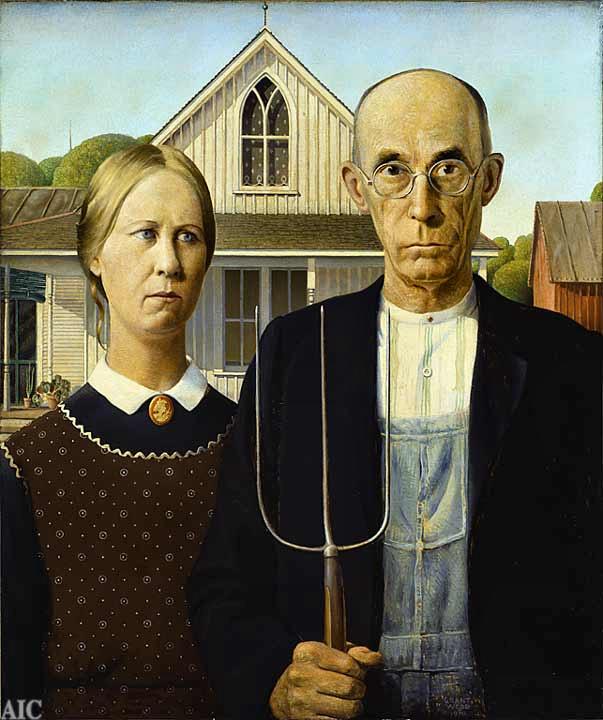
The readings this week bring up good points on the subjectivity of gender and the autistic role. It seems that there are always conscious and unconscious decisions that are instilled by the artist in regards to gender. As Adrian Piper questioned herself - How might I be different if the history i chronicled in my journal had happened to be a man? I guess the unconscious decisions are what i find to be more fascinating because honestly when I take pictures, I don't think there are any overt Male-like decisions that cross my mind. I feel that the decisions I make when taking a photograph is rather textbook in framing, lighting, subject matter, balance, focus, etc. The more interesting half is the unconscious decisions in the message of the pictures and what they are telling. Gender finds its home here as unconscious (and sometimes made conscious by artists such as Eleanor Antin) motifs are expressed through the lens. To think of some examples the 'Kissing on VJ Day'. Here male dominance is framed dearly with the passive loyal female. The reason it was so popular is because it upheld the general characteristics of either genders, which audiences can grasp upon. American gothic as well comes to mind as the both characters appease the 'classic midwest Americans.' Reaching back to figure photography in the early 1970's, feminism was a growing topic in art. Artists such as Kate Craig looked at these characteristics and pointed out the "absurdity, puns, and pranks" and had a "Warholian fascination with Mass culture." In doing so, they invented aliases and used gender based symbolism in their performances and photographs. The thing that i find interesting is that these artists are putting themselves out there fulfilling their gendered 'role' while still having the "art consciousness." Going back to Adrian Piper, shes describes "the work has no meaning of independent existence outside of its function as a medium of change...the catalytic agent between myself and the viewer." I feel for my next photo project I would like to adapt these concepts of change into my work. I feel I can accomplish both feministic and masculine insight on photos regardless of what gender the subject is. Just looking at mass culture is enough to grasp the general publics view on sexuality and gender roles.